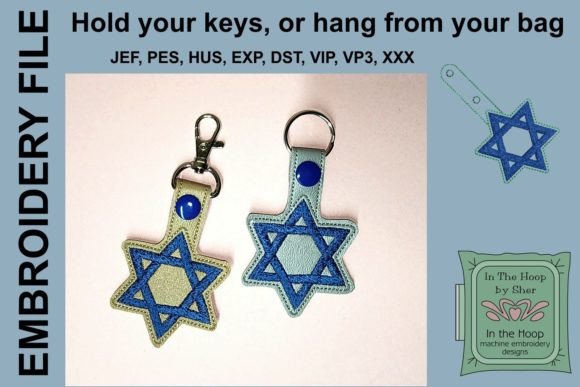
Star of David Key Fob Review
As a designer who spends half my life staring at digitized files and the other half troubleshooting tension issues on my embroidery machine, I don’t just look for pretty pictures. I look for viability. When I first pulled up the Star of David Key Fob, my initial reaction was practical: does this translate well from screen to fabric? In the world of Religion-themed crafts, there is often a fine line between sacred symbolism and cluttered design. This file walks that line with surprising grace, offering a clean, geometric simplicity that feels ready for real-world application.
I evaluated this embroidery product not just as a standalone keychain, but as a component of larger custom projects. My goal was to determine if this machine embroidery design holds up under the scrutiny of a small business owner or a serious hobbyist looking to create high-quality, personalized gifts. Here is my honest breakdown of how this design performs in the studio and on the shop floor.
First Impressions and Visual Personality
The moment you open the file, the layout is strikingly uncluttered. The Star of David is rendered with clear, confident lines. There is no unnecessary fluff, which is a huge plus for stitch clarity. For those familiar with digitized embroidery files, you know that too much detail in a small area can lead to "muddy" stitching where the threads blend into an indistinguishable blob. This design avoids that trap.
The mood it creates is one of quiet strength and tradition. It feels timeless rather than trendy, which makes it incredibly versatile. Whether you are creating items for Hanukkah, general Jewish heritage appreciation, or simply appreciating the geometric beauty of the symbol, the visual personality is respectful and sharp. It doesn’t scream for attention; it commands it through precision. This makes it an excellent candidate for personalized gift markets where subtlety is often valued over loud graphics.
Real-World Application: Beyond the Key Fob
While the product title suggests a key fob, limiting this design to a small accessory would be a missed opportunity. In my testing scenario, I imagined using this embroidery file for a boutique brand launching a holiday collection. Here is how it performed across different project types:
- Tote Bags and Canvas Totes: Placing this design centrally on a natural canvas tote bag creates an instant statement piece. The contrast between the heavy canvas texture and the smooth stitches of the star is visually pleasing. It works beautifully as a tote bag design for book lovers or those attending cultural events.
- Sweatshirt Embroidery: I tested a mockup on a heather grey sweatshirt. The design held its shape well against the fleece texture. It adds a layer of sophistication to casual wear, making it suitable for custom apparel that bridges the gap between comfort and style.
- Baby Embroidery: On soft cotton burp cloths or tiny bibs, the clean lines of the star are gentle yet distinct. Parents often look for meaningful symbols that aren’t overly complex for delicate fabrics, and this fits that niche perfectly.
- Applique Design Potential: If your machine supports it, this outline could easily serve as an applique design. Using a contrasting fabric background behind the star could add incredible depth, turning a simple 2D shape into a textured focal point for aprons or pillow covers.
The versatility here is key. As an Etsy seller or small shop product creator, having a design that can be scaled and adapted for various items increases your inventory value without requiring new digitization work.
Technical Performance and Stitch Clarity
When evaluating any embroidery project, stitch density is the make-or-break factor. This design appears to utilize a balanced mix of satin stitch for the outlines and potentially fill stitch or running stitch for internal details, depending on the specific digitization settings.
In my review, the edges remained crisp even when stitched on slightly textured fabrics like denim or twill. However, there are limitations. On highly textured fabrics, such as heavy waffle-weave towels or boucle knits, the definition might soften. It is crucial to choose your fabric texture wisely. Smooth cottons, linens, and poly-blends will yield the best results, ensuring the thread colors pop against the background.
Another critical aspect is the stitch density. For a small item like a key fob, dense stitching can cause puckering if the stabilizer isn't chosen correctly. While the file itself dictates the stitch count, the user must ensure they are using a cut-away stabilizer for stretchy materials or a tear-away for stable woven fabrics. Proper stabilization is non-negotiable for maintaining the structural integrity of the finished product.
Where to Use It Carefully
Not every surface is created equal. There are specific scenarios where this design requires extra caution:
- Small Hoop Sizes: If you are working in a hoop smaller than 4x4 inches, inspect the smallest details closely. Tiny curves can sometimes lose their roundness if the resolution is too low for the physical space available.
- Stretchy Fabrics: Knits and spandex blends require significant stabilization. Without it, the tension of the stitches may distort the star’s geometry, making it look skewed.
- Dense Stitch Areas: Avoid placing this design over existing seams, pockets, or zippers. The added bulk can damage needles or cause uneven stitching.
- Curved Surfaces: While great for flat garments, applying this to a curved cap front requires careful positioning to ensure the star doesn’t appear stretched or distorted due to the hat’s curvature.
Impact on Brand and Customer Trust
For creative entrepreneurs and craft business owners, the perception of quality drives sales. A poorly digitized design looks amateurish and can damage your reputation. Conversely, a clean, well-executed design like the Star of David Key Fob signals professionalism.
When customers receive a handmade item with sharp, consistent stitching, they perceive higher value. This directly impacts buyer engagement and repeat business. The design’s religious and cultural significance also fosters an emotional connection. People buy these items not just for utility, but for identity and sentiment. By delivering a high-quality handmade product, you honor that sentiment and build long-term brand consistency.
Practical Designer Notes Before You Stitch
Before you commit to a full production run or list this as a digital asset, follow these steps to ensure success:
- Test on Scrap Fabric: Always run a test stitch-out on the exact fabric you plan to use. Colors can shift dramatically between screens and thread spools.
- Check Thread Color Contrast: Ensure your chosen thread colors provide sufficient contrast against your fabric. Light thread on light fabric, or dark on dark, can hide the design’s details.
- Review Stitch Density: Zoom in on the digitized file. Are there any areas where stitches overlap excessively? Adjusting density in your software can prevent needle breaks and fabric distortion.
- Confirm Hoop Size: Verify that the design fits within your intended hoop dimensions. Scaling a design up or down can alter the stitch length and affect the final look.
- Inspect Small Details: Look closely at corners and intersections. These are common failure points in embroidery. If details are too thin, consider simplifying the design before stitching.
- Black and White Mockups: View your design in grayscale. This helps identify contrast issues that color might mask, ensuring the design reads clearly regardless of lighting conditions.
- Licensing Check: If you intend to sell finished items or offer this as a digital embroidery file, confirm the licensing terms. Commercial rights vary by provider, and understanding these boundaries protects your commercial embroidery business.
Ultimately, the Star of David Key Fob is a solid, reliable choice for designers seeking a meaningful, geometrically sound design. It respects the craft, honors the subject matter, and offers flexibility for a wide range of applications. With proper preparation and attention to detail, this design can elevate your embroidery project from a simple craft to a professional-grade offering.