Guitar Coasters Embroidery Design Review
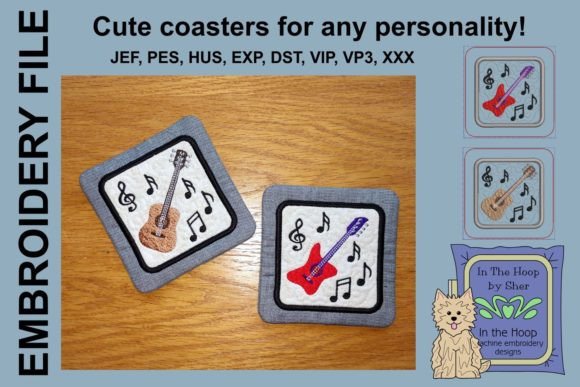
As an embroidery seller who spends hours evaluating digital files before adding them to my shop, I am always looking for designs that strike the right balance between visual appeal and commercial viability. When browsing Creative Fabrica for new additions to my small business collection, I recently came across a design titled Guitar Coasters. At first glance, the title suggests a functional item, but as an experienced crafter, I know that in the world of machine embroidery, titles can sometimes be misleading or simply descriptive of the motif rather than the final product. After analyzing the description—highlighting stylish intricacy, vibrant colors, and detailed craftsmanship—I decided to evaluate this file not just as a coaster pattern, but as a versatile asset for my broader range of handmade products.
Visual Personality and Aesthetic Appeal
The description emphasizes "stylish and intricate" details alongside "vibrant colors." This combination immediately signals a design that leans toward the modern and bold side of the spectrum. It does not sound like a rustic, muted, or minimalist piece; instead, it feels energetic and playful. For an Etsy seller, understanding the aesthetic is crucial because it dictates who will buy the product and how they will use it.
This design seems best suited for buyers who appreciate music culture with a touch of flair. It fits perfectly into categories that are classic yet fun. The mention of bringing designs "to life" suggests that the thread work likely has enough depth to catch the light, making it ideal for products where texture matters. Whether it feels cute, premium, or elegant depends largely on your color choices, but the underlying structure appears robust enough to support a high-quality finish. It avoids being overly feminine or strictly masculine, positioning itself as a unisex-friendly design that appeals to any music lover.
Product Versatility Beyond Coasters
While the name implies coasters, savvy sellers know that the most profitable route often involves applying popular motifs to higher-margin items. Here is how I see Guitar Coasters fitting into various product lines:
- Custom Apparel: The intricate nature of the design makes it perfect for chest-area embroidery on sweatshirts or t-shirts. Music festivals and casual wear are huge markets, and a well-executed guitar motif stands out without being overwhelming.
- Tote Bag Designs: Canvas tote bags are a staple for craft fairs. Placing this design on the front pocket or center panel of a tote bag creates a practical accessory for musicians or students. The durability required for a coaster translates well to heavy-use bags.
- Kitchen Towel Embroidery: If the design scale allows, it could work beautifully on kitchen towels for the musician’s home. Home decor is a growing niche on Etsy, and combining utility with personal interest (music) increases the perceived value.
- Embroidered Patches: Intricate designs often make excellent patches. You can sell these as iron-on or sew-on accessories for denim jackets, backpacks, and caps. Patches have low material costs and high profit margins.
- Baby Embroidery: While guitars might seem mature, stylized versions can work for baby blankets or onesies, especially if marketed as "little rockstar" gifts. The vibrant colors mentioned in the description would pop nicely against soft pastels or whites.
Commercial Applications and Listing Strategy
For the digital seller and the physical product creator alike, this design offers multiple revenue streams. In terms of commercial embroidery, you can create a cohesive collection. Imagine a bundle that includes matching designs for a cap, a mug, and the coaster itself. Bundles increase average order value on Etsy.
When preparing your listings, consider creating printable mockups early in the process. Visualizing the Guitar Coasters design on different fabrics helps you determine if the stitch density holds up at smaller sizes. If you plan to sell the digital embroidery file itself, ensure your listing images show close-ups of the intricate details. Buyers need to see that the "detailed craftsmanship" promised in the description is real.
Buyer-Focused Value Proposition
Why would a customer choose a product featuring this specific design? The answer lies in emotional connection and gifting potential. Music is a universal language, and personalized gifts are among the top searches on handmade marketplaces. A product featuring Guitar Coasters feels more memorable than a generic floral pattern because it speaks to a specific hobby or passion.
This design helps a product feel more professional and giftable. When photographing your finished goods, the vibrant colors will stand out against neutral backgrounds, making your photos more attractive to online shoppers. The "unique addition to any home decor" claim holds true if the design is executed cleanly. It transforms a simple household item into a conversation starter. For the buyer, owning a piece of handmade art that reflects their love for music provides a sense of identity and pride.
Practical Seller Notes and Quality Control
Before you rush to list this design, there are several technical steps every serious seller must take. Relying solely on the product description is not enough. You must verify the technical specifications to ensure a smooth production process.
- Test Stitch-Out: Always create a sample stitch-out on the actual fabric you intend to sell. Check how the stitch density affects the drape of the material. If the design is too dense for a lightweight t-shirt, it may pucker.
- Hoop Size Confirmation: Confirm the maximum hoop size required. If you are producing large batches, you need to know if the design fits standard 4x4 hoops or requires larger, less common frames. This impacts your efficiency and equipment needs.
- Thread Color Options: Experiment with different thread colors. The description mentions vibrant colors, but you should test which combinations offer the best contrast and longevity. Some bright threads may fade faster than others.
- Stabilizer Selection: Determine the appropriate stabilizer for each product type. A sturdy cut-away stabilizer might be needed for hats, while a tear-away could suffice for kitchen towels. Getting this wrong leads to ruined products.
- Licensing Verification: This is critical. Before selling any finished goods, review the Creative Fabrica licensing agreement. Ensure you have the correct commercial license for the volume of sales you plan to generate. Do not assume standard subscriptions cover all commercial uses.
- Readability Check: Look at your design at thumbnail size. Can the guitar shape and coaster details be recognized quickly? If the intricacy makes it look like a blob from a distance, you may need to simplify the design or adjust the placement.
Final Thoughts for the Creative Entrepreneur
Evaluating a design like Guitar Coasters is about seeing beyond the literal object. It is about recognizing the potential for a versatile, high-quality asset that can elevate your brand. The description promises style and detail, which are key drivers of sales in the competitive handmade market. By testing thoroughly, verifying licenses, and thinking creatively about application—from sweatshirt embroidery to personalized gifts—you can turn this single file into a cornerstone of your product line.
Remember, the success of your craft business often depends on the quality of your inputs. Taking the time to assess the visual personality, commercial fit, and technical requirements of each embroidery file ensures that you are investing your time and materials wisely. If the stitch quality is high and the aesthetic resonates with your target audience, this design could easily become a bestseller. Keep your eyes open for opportunities to cross-pollinate ideas, and always prioritize the end-user experience in your photography and descriptions.