Poison Apple Embroidery Design Review
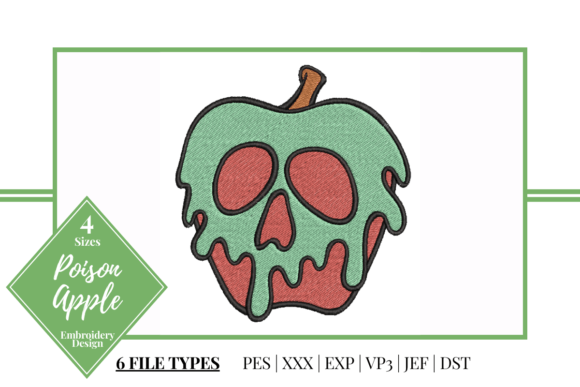
As an embroidery designer who has spent years turning digital concepts into tangible brand assets, I approach every new file with a mix of creative excitement and commercial skepticism. When evaluating a design for small business merchandise, branded patches, or uniform accents, the question is never just "does it look good?" but rather "will this hold up in production and elevate my client’s brand?" Today, I am reviewing the Poison Apple embroidery design. At first glance, described as a wonderful way to add a stylish accent to home decor, outfits, and accessories, this piece holds significant potential for versatile application. However, its success in a commercial context depends entirely on how well we understand its limitations and strengths.
First Impressions: Visual Personality and Brand Fit
The title "Poison Apple" immediately conjures specific imagery—dark fairy tales, bold contrasts, and a touch of playful danger. For a small business owner, whether you run a boutique bakery, a gothic-inspired fashion label, or a creative studio, this design offers a distinct visual personality. It feels both classic and modern, with the potential to be interpreted as either elegant or rustic depending on your thread choices.
In the realm of brand identity, having a unique visual anchor is crucial. The Poison Apple design provides that anchor. It is not merely decorative; it carries narrative weight. When placed on a custom apparel item like a hoodie or a tote bag, it signals confidence. It suggests that the brand behind the product is unafraid to stand out. For Etsy sellers and merch creators looking to differentiate their shops from generic competitors, this level of thematic depth is invaluable. It transforms a simple commodity into a statement piece, enhancing buyer engagement through storytelling.
Real-World Business Applications
The true test of any machine embroidery design is its performance across various mediums. Here is how I envision Poison Apple functioning in real-world commercial scenarios:
- Embroidered Patches: This design is ideally suited for iron-on or sew-on patches. Small businesses often use patches as low-cost entry points for customers to try their brand. Whether attached to denim jackets, backpacks, or caps, the design’s structure allows it to remain legible and striking even at smaller scales.
- Staff Uniforms and Aprons: For a café or a boutique, branding staff uniforms creates a sense of unity and professionalism. Placing Poison Apple on the chest area of a work shirt or the pocket of an apron adds a personalized touch that customers appreciate. It humanizes the brand while maintaining a polished look.
- Tote Bag Design: Tote bags are ubiquitous marketing tools. A well-executed tote bag design featuring this motif can serve as a walking billboard. The contrast between the fabric texture and the embroidery threads will draw the eye, making the bag desirable enough to keep and reuse.
- Cap Embroidery: Caps remain a staple in small business merch. The curved surface of a cap requires careful digitizing, but if the design is balanced correctly, it sits perfectly on the front panel, offering high visibility without overwhelming the wearer.
- Product Packaging Accents: Beyond apparel, consider using this design on hang tags, labels, or even directly onto fabric gift boxes. Adding a small embroidered detail to packaging elevates the perceived value of the handmade product, making the unboxing experience memorable.
Strategic Considerations and Limitations
While the aesthetic appeal is strong, a professional review must address where caution is required. Not every surface or size is suitable for every design element.
When scaling Poison Apple down for tiny lettering or intricate outlines, stitch density becomes a critical factor. If the design is too detailed for the chosen scale, the threads may merge, creating a muddy appearance that loses its impact. Similarly, applying this design to textured fabrics can obscure fine details. Always inspect the spacing between elements before committing to full-scale production.
Furthermore, consider the washing durability. Items that require frequent washing, such as staff aprons or children’s clothing, need designs that are robust. High stitch density can sometimes lead to puckering if not supported correctly by the right stabilizer. Dark uniforms also present a challenge; ensure that the chosen thread colors provide sufficient contrast against the background fabric. Without proper contrast, the design will fade into the material, defeating its purpose as a branding tool.
Impact on Brand Identity and Customer Trust
Quality embroidery communicates quality craftsmanship. When a customer sees a crisp, well-placed embroidered patch or logo, they subconsciously associate that precision with the care the brand puts into its products. This directly influences customer trust and recognition.
A consistent visual language across all touchpoints—from social media graphics to physical goods—builds a cohesive brand story. Using Poison Apple as a recurring motif helps establish this consistency. It becomes a recognizable symbol that customers begin to associate with your specific style and values. This recognition is powerful in a crowded marketplace, helping your digital embroidery file translate into long-term brand loyalty.
Practical Designer Notes for Production
Before adding Poison Apple to your production queue, follow these essential steps to ensure a successful outcome:
- Test in Black and White: Start by digitizing or testing the design in monochrome. This helps you evaluate the balance and composition without being distracted by color choices.
- Check Small Scale Legibility: Simulate how the design looks at the size of a patch or a chest logo. If details get lost, simplify the digitizing or adjust the scale.
- Review Thread Color Contrast: The description notes that colors can be altered based on machine threads. Experiment with different palettes to find the one that best suits your brand’s aesthetic and ensures maximum readability.
- Inspect Spacing and Density: Look closely at the stitch paths. Are there areas where the needle might hit the same spot too many times? Adjusting these can prevent thread breaks and fabric damage.
- Confirm Hoop Size: Ensure the design fits within your standard hoop sizes to avoid unnecessary re-hooping, which can misalign the design.
- Test on Real Fabric: Never assume a design will look the same on screen as it does on fabric. Run a sample on the actual material you plan to use, including the appropriate stabilizer.
- Create a Printable Mockup: Before producing bulk items, create a printable mockup for client approval. This allows stakeholders to visualize the final product and catch any issues early.
- Compare Against Other Assets: Place the design beside other design assets in your collection. Does it fit harmoniously? Is it too dominant or too subtle?
- Confirm Commercial Licensing: Most importantly, verify that you have the correct rights to use this embroidery file for commercial purposes. Unauthorized use can lead to serious legal and financial repercussions.
The Poison Apple design is more than just a seasonal decoration; it is a versatile tool for brand enhancement. By understanding its visual strengths and respecting its technical limitations, you can leverage this design to create premium finished products that resonate with your audience. Whether used for Halloween-themed collections year-round or as a signature element for a darkly elegant brand, this design offers a wealth of opportunity for the savvy embroiderer.